
"coffee processing China"
9000 article(s) found

China's coffee consumption has grown at an annual rate of 20%-much higher than the global growth rate of 2%.
In 2008, Huang Wenguang chose to enter Nankeng Reclamation Coffee Manor in Zhangzhou, Fujian Province, and began to grow local coffee. In his view, coffee is squeezing into the Chinese market, which is dominated by tea culture, and if coffee is to be truly successful in China, there must be a coffee bean that is more suitable for the Chinese population, and a local coffee brand with more Chinese characteristics is needed, on the one hand, the market demand for

2014 China (Guangzhou) International Coffee Industry Expo
With the rapid development of China's economy, coffee, as a healthy drink with unique taste, is deeply loved by consumers, especially middle-aged and young people.

Yunnan Coffee's Joy and Worry China Yunnan Coffee Lack of Coffee Planting and Processing Standards
Professional barista exchanges, please pay attention to coffee workshop (Weixin Official Accounts cafe_style) In 1892, when French missionaries successfully planted the first coffee tree in a place called Zhukula for their own coffee needs, he might not have thought that coffee would become a highlight of Yunnan plateau characteristic agriculture a hundred years later. Yunnan Province began large-scale planting in the 1950s
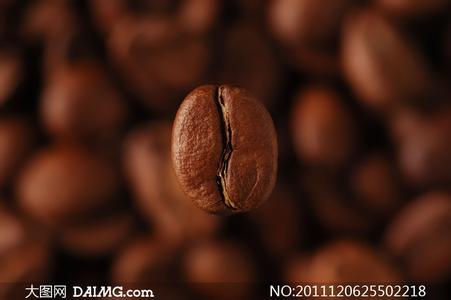
What is the annual output of cat poop coffee beans in China?-how much is Manning Kopi Luwak?
What is the annual output of cat shit coffee beans in China-Mantenin Kopi Luwak coffee beans usually go through the process of shell fermentation. Coffee beans in the civets' intestines, special bacteria provide a unique fermentation environment, and the flavor becomes unique. Particularly thick and mellow. The coffee beans fermented by civets' intestines and stomach are very thick and mellow. Indonesian coffee has an earthy flavor and traditional Chinese medicine.

The first Yunnan Fine Coffee Cultural Festival was held in Lincang in December to display Yunnan Fine Coffee.
Professional coffee knowledge exchange more coffee bean information please follow the coffee workshop (Wechat official account cafe_style) the first Yunnan boutique coffee culture festival and the fourth Yunnan coffee cup China brewing finals (hereinafter referred to as the boutique coffee culture festival) will be held in Lincang City on December 21, 2018, will vigorously promote and display Yunnan boutique coffee, expand Yunnan boutique coffee brands

With the rapid development of coffee in China, there has been a qualitative breakthrough in the planting area and total output.
According to current market data, emerging countries represented by China, Brazil, Russia, India and South Africa currently consume 20% of the world's coffee, which will reach 35% by 2020. Domestic consumers have a growing demand for coffee. In recent years, the world coffee giants have seized the Chinese market, and domestic coffee companies have also begun to build local coffee brands.

Coffee appeared relatively late in China, but why has it maintained a rapid development for 10 years?
China's coffee market has ushered in a boutique era. According to the survey, the main consumers of coffee are urban workers. This part of the consumer group is also the leader of social fashion, they are interested in foreign food culture and easy to accept. With the consumption of coffee, coffee culture came into being, and the coffee shop has become the breeding place of coffee culture. To some extent, coffee culture
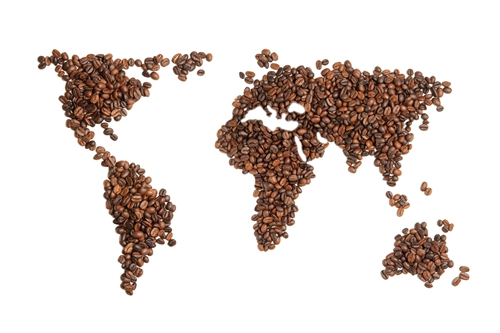
Pu'er Coffee fragrance "Belt and Road Initiative" Chinese Coffee producing area Yunnan small Coffee
Pu'er is known not only as the tea city of China, but also as the coffee capital of China. Coffee industry has become one of the characteristic agriculture in Pu'er plateau and an important pillar industry in the construction of national green economy experiment and demonstration zone. With the east wind of Belt and Road Initiative, coffee carries the dream of Pu'er people to the world. The cultivation of Pu'er coffee began at the end of the 19th century, and its industrialization began in 1988.
Roasting Technology Research Coffee roasting Network China Coffee Network Coffee Barista's Gift
Technical research editors produce a series of chemical changes in the process of baking. After about 5-25 minutes of baking (depending on the temperature selected), the green coffee beans lose some humidity and turn yellow. In this process, the coffee beans will swell, changing from a strong, high-density raw bean to a low-density fluffy state. After this process, the size of coffee beans will increase.

Latest news from Shanghai: introduction and contact information of the 16th China (Shanghai) Coffee Exhibition in 2016
2016 16th China (Shanghai) Coffee Exhibition The 16th China (Shanghai) coffee exhibition 2016 Exhibition time: June 14-16, 2016 venue: Shanghai New International Expo Center (2345 Longyang Road, Pudong) invitation: Asian Coffee Association China Fine Coffee Association Yunnan Coffee Industry Association T.C.A. Taiwan Coffee Association Guang

The main theme of China Mangshi (International) Coffee Culture Festival is "Kiss first Coffee"
Guests went to Hougu No. 1 Coffee Farm to experience the scene on January 24, the 4th China Mangshi (International) Coffee Culture Festival kicked off in Mangshi, Dehong Prefecture, the hometown of Chinese coffee. More than 300 coffee industry people from more than 20 countries and regions around the world and more than 10 provinces and cities in China gathered in Mangshi to taste the kiss coffee promoted by the organizers. Some of the goods in the exhibition this Coffee Culture Festival
Coffee beans grown in Pu'er District, Yunnan Province, China? Is it good?
Coffee beans grown in Pu'er District, Yunnan Province, China? Is it good? Coffee producing areas, at present, Yunnan coffee producing areas are mainly distributed in Simao, Banna, Wenshan, Baoshan and Dehong in the south and southwest of Yunnan. Huangsheng Coffee Company imports Yunnan coffee mainly in Pu'er, a small town in Simao and the hometown of Pu'er tea, surrounded by lush mountains and white clouds.

What are the producing areas of coffee beans grown in China?
Coffee producing areas in China are mainly in Hainan, Yunnan, Guangdong and Taiwan. Northern Hainan Island, southern Yunnan Province, located between 15 degrees north latitude and the Tropic of Cancer, its coffee is strong but not bitter, fragrant but not strong, very unique. And with a little fruit flavor, it is the top grade of coffee, which is highly praised internationally. Taiwan is located in the subtropical zone, with many mountains and obvious rainy season, which is not bad for coffee.

Coffee beans can be planted there in China. Environmental characteristics, varieties and taste manor.
The main producing areas are Sumatra, Guawa and Sulawesi. 90% of them are Robbas species, which can be rated as the first in the world in quality. Sumatra is best known for its rich, catchy and upscale Mantenin. In addition, Mount Jiayu is also produced in the north of the island, while Arabica in Guawa has a good sour taste, especially loved by the Dutch. What Sulawesi produces is a large-grained Carlo.
Post-90s barista Liang Fan represented China in Brazil's WLAC today.
The World baristas Series opened today in Brazil, holding the World Coffee Brewing Competition (World Brewers Cup, hereinafter referred to as WBrC), the World Latte Art Competition (World Latte Art Championship, hereinafter referred to as WLAC), and the World Coffee and Spirits Competition (World Coffee in Good Spiri) at the Brazilian Coffee Show from November 7th to 9th local time.

The Development of Fine Coffee in Yunnan, China how to plan for the future small-grain coffee is not the only way out
Professional coffee knowledge exchange more coffee bean information please follow the coffee workshop (Wechat official account cafe_style) Chinese coffee Yunnan Yunnan is one of the earliest provinces in China to grow coffee. At the end of the 19th century, missionaries from Europe went to Yunnan Dali and other places to preach, bringing coffee seeds to Yunnan. In the early stage after liberation, Lujiangba in Baoshan was successfully planted, and it was found that the adaptability was good.

Which Coffee Flavor Factory in China Kunming Manning Coffee processing Factory
In ancient times, Arabs first dried and boiled coffee beans and drank the juice as stomach medicine, thinking that it could help digestion. Later, it was found that coffee also had a refreshing effect, and because Muslims strictly prohibited drinking, coffee was used instead of alcoholic beverages as a refreshing drink. After the 15th century, Muslims who made pilgrimages to the holy land of Mecca brought coffee back one after another.

The 4th China Mangshi Coffee Culture Festival will be held in Mangshi, Dehong Prefecture.
China Economic News Network: (Deng Daoyong) on December 30, the reporter learned from the Yunnan Coffee Industry Association: sponsored by the China-ASEAN Coffee Cooperation Committee, the China Coffee Engineering Research Center, and the Yunnan Coffee Industry Association, the 4th China Mangshi (International) Coffee Culture Festival hosted by Dehong Hougu Coffee Co., Ltd. will be held in Mangshi, Dehong Prefecture, from January 23 to 25, 2015.
CAFFE PASCUCCI landed in China's professional coffee market.
If you have a certain understanding of coffee culture and a certain pursuit of coffee quality, you will certainly look for the most authentic Italian coffee in all kinds of cafes all over the street.
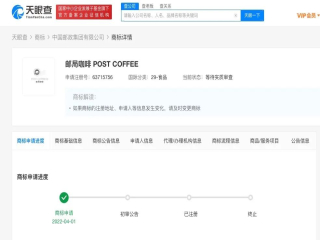
China Post applied for the post office coffee trademark, but it was rejected!
Recently, the process of several "Post Office Coffee POSTCOFFEE" trademarks applied for registration by China Post Group Co., Ltd. has been changed to a notice of rejection, according to Tianyuan App. The trademark was applied for on April 1, 2022, and the international classification includes convenience food, catering, accommodation, wine, etc. It is well known that trademarks